4,000 Sq. Ft. Sod Installation and Regrade in Novi
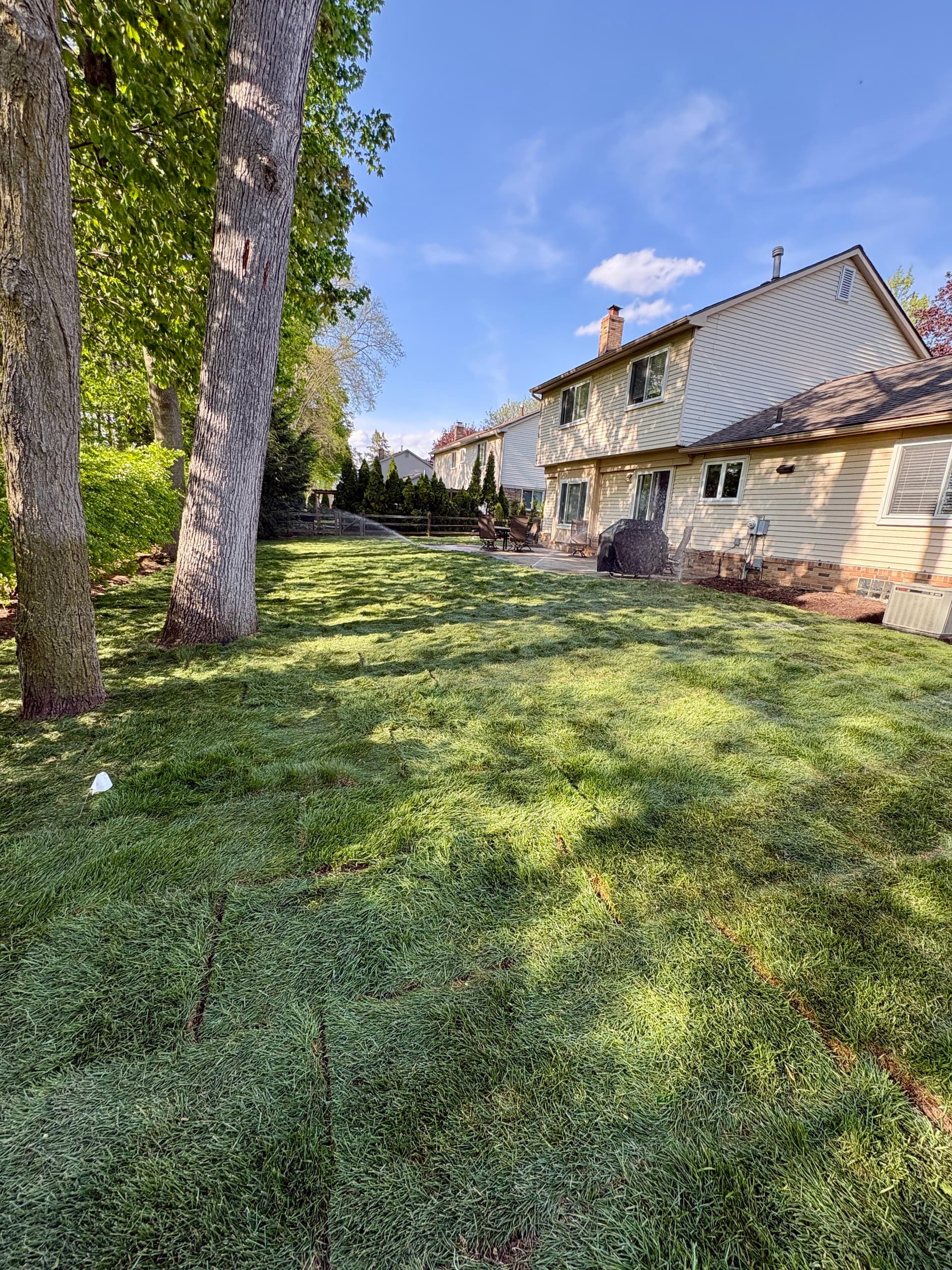
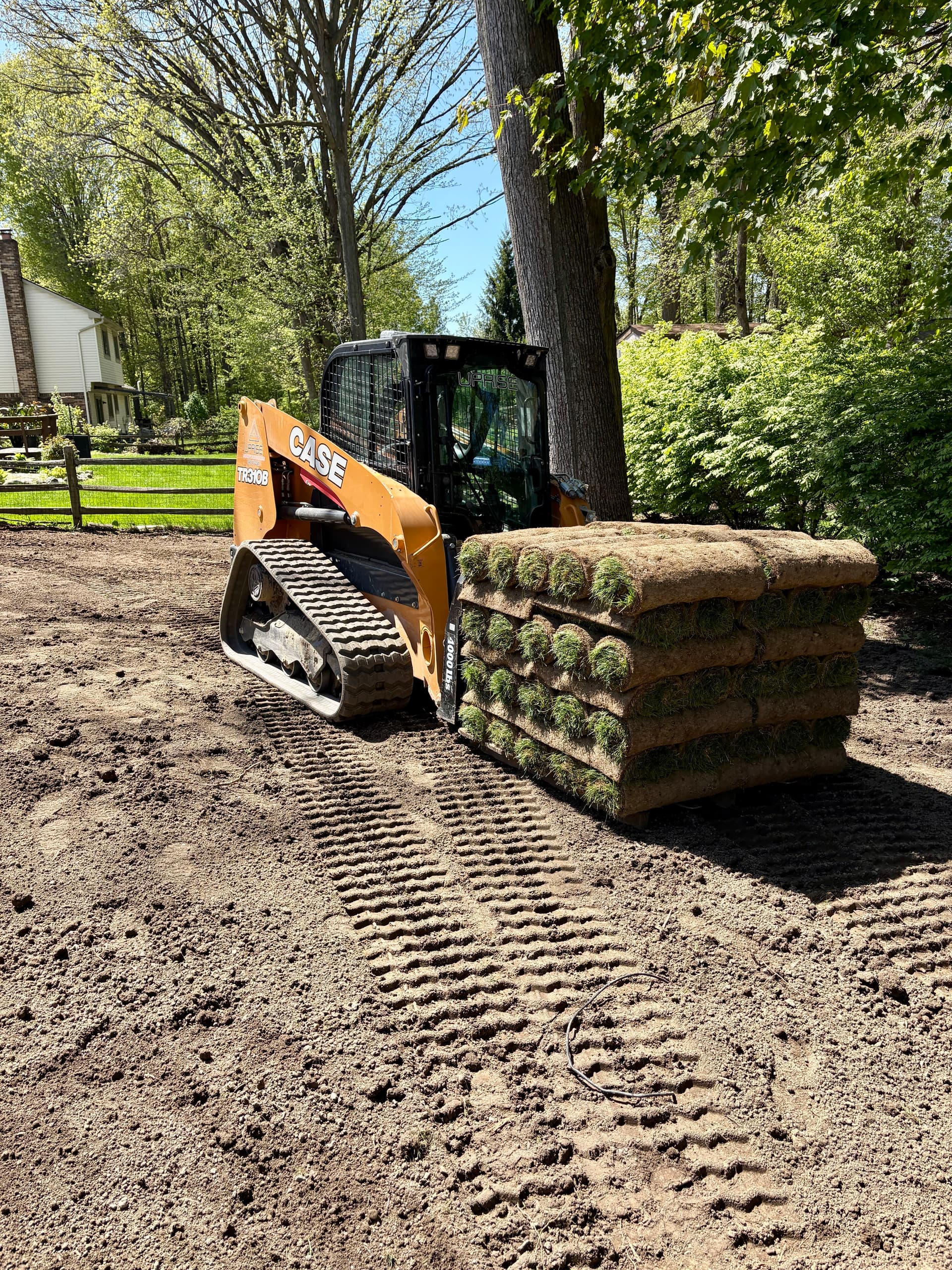
Some backyards just refuse to cooperate. They hold water after every rain, grow thin and patchy grass no matter what you do, and turn into a muddy mess the moment anyone walks on them. That's exactly what we were dealing with on this Novi job - a yard that wasn't draining right and had a lawn that was beyond saving with simple repairs.
The fix here wasn't just throwing sod on top of a bad situation. We stripped out the old lawn completely, brought in fresh topsoil, and regraded the entire yard so water actually moves away from the house the way it's supposed to. Getting the grade right before anything else goes down is the part most people don't think about - but it's the difference between a lawn that thrives and one that rots.
Once the ground was shaped and prepped, we laid 4,000 square feet of fresh sod across the backyard. We also adjusted the sprinkler system so the new grass gets even, consistent coverage from day one. Skipping that step is one of the most common reasons new sod struggles - it either dries out in spots or gets overwatered in others.
What you end up with is a backyard that actually works. Clean, green, draining properly, and set up to establish strong roots. No more muddy patches, no more standing water, no more fighting a lawn that was never going to grow right on its own.
If your backyard is holding water or you've got a lawn that's thin and struggling no matter what you throw at it, the problem is usually below the surface. Grading and a fresh sod installation can fix what fertilizer and overseeding never will.