Backyard Grade Raise and Unilock Beacon Hill Patio Install
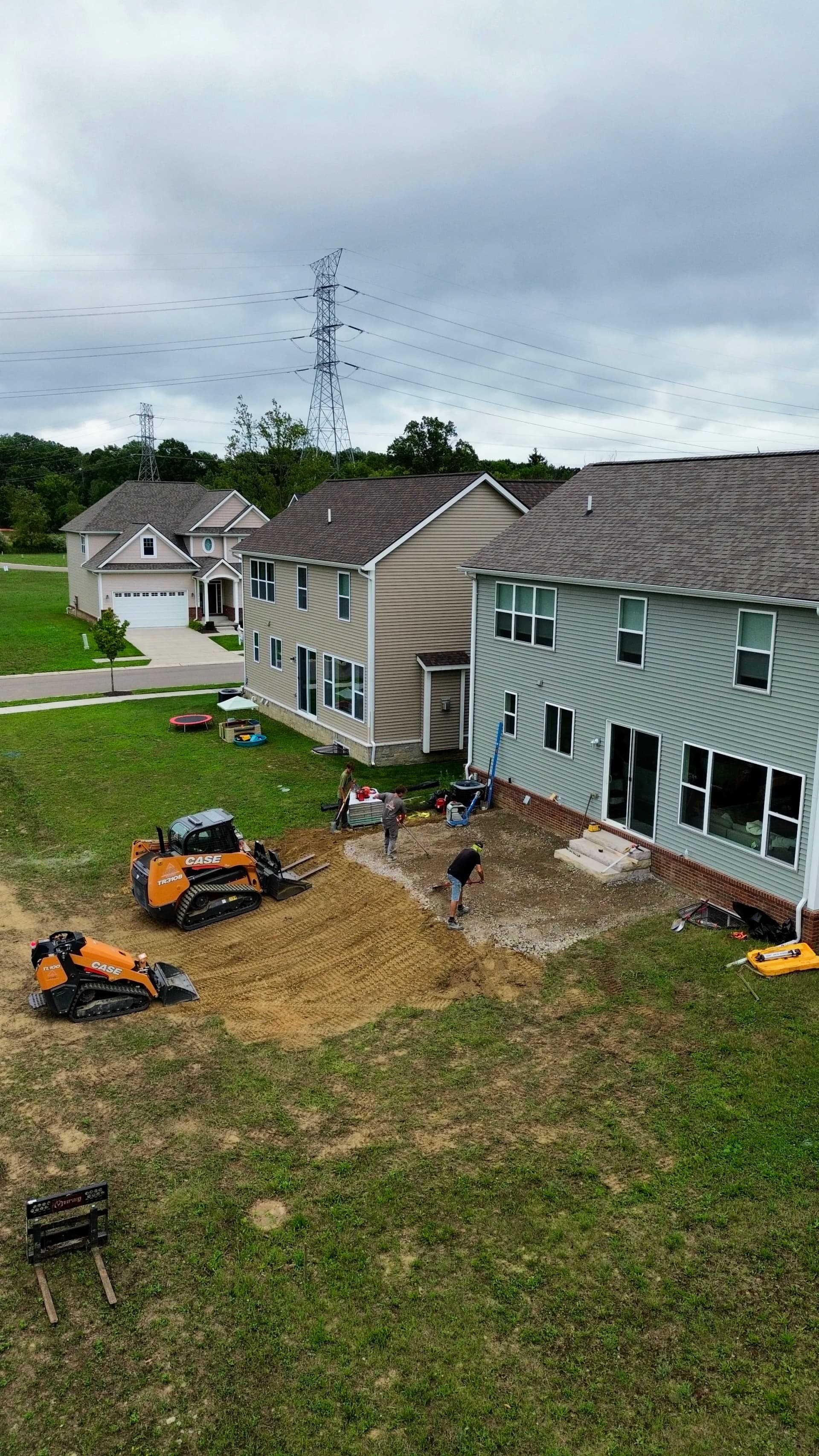
A lot of backyards in newer construction neighborhoods share the same problem - the grade just isn't right. The yard sits too low, water doesn't move away from the house properly, and there's no real usable outdoor space to speak of. That's exactly what we were dealing with here.
Before any pavers touch the ground, the prep work has to be done right. We brought in equipment to raise the grade and establish a proper base. Skip this step and you're setting up the finished patio to shift, settle, or drain poorly down the road. We don't cut corners on the foundation because the surface is only as good as what's underneath it.
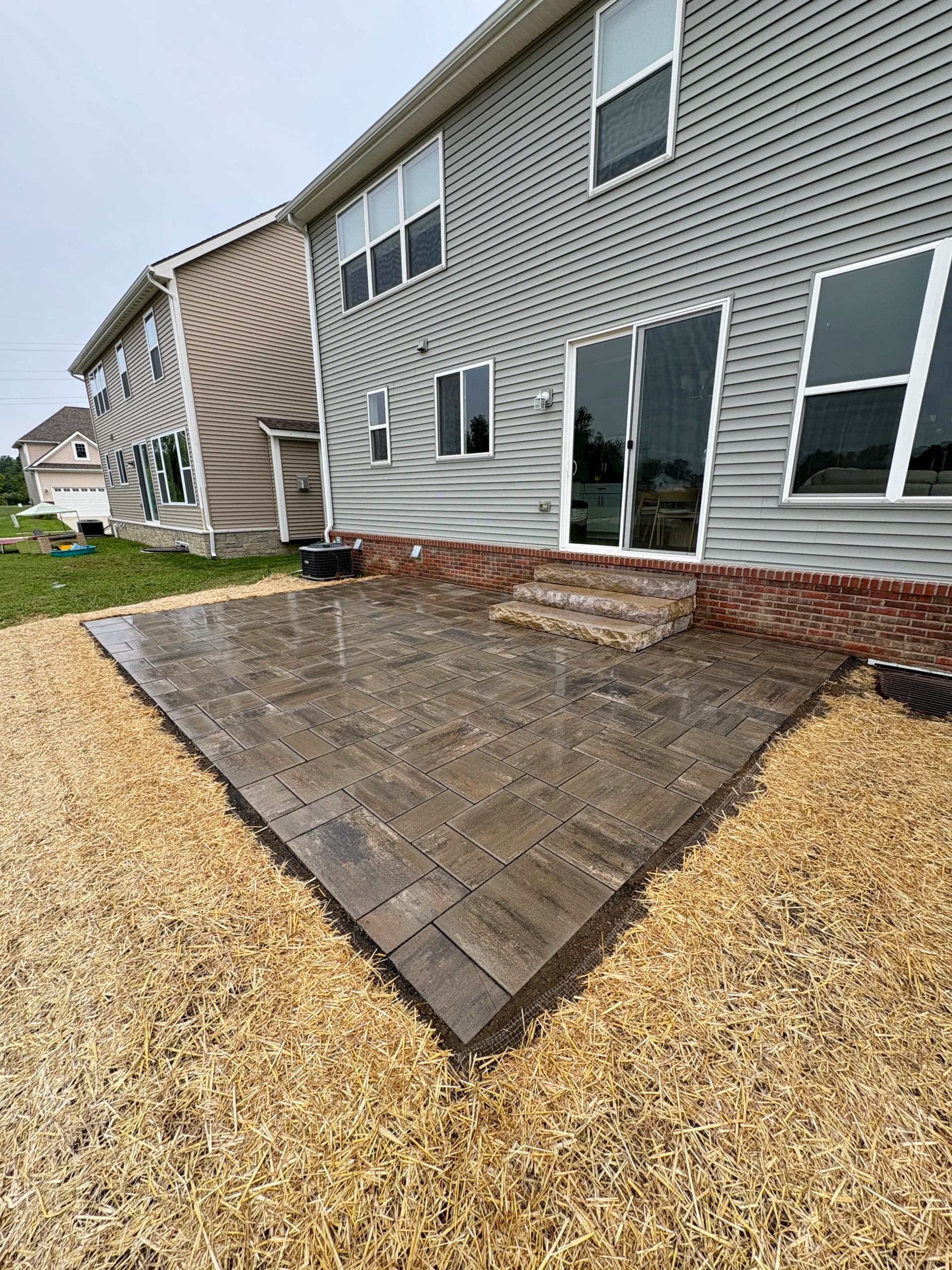
Once the base was dialed in, we got to work on the Unilock Beacon Hill pavers. This is a large-format paver that has a wood-plank look to it - clean, modern, and it holds up well over time. We laid them in a staggered pattern that gives the patio a sharp, intentional finish. The large format steps leading from the back door down to the patio tie the whole thing together and make the transition feel natural.
The straw you see around the patio perimeter is part of our new construction seeding process. After hardscaping work like this, the surrounding soil gets disturbed. We seed and protect it so the lawn fills back in cleanly rather than leaving bare dirt exposed. It's a detail that matters for the overall finished look of the space.
What started as a rough, uneven backyard with no real function ended up as a clean, level patio that actually works. Good hardscaping does that - it takes a problem area and turns it into somewhere you actually want to spend time.