Kentucky Blue Sod Installation with Full Regrade in Northville
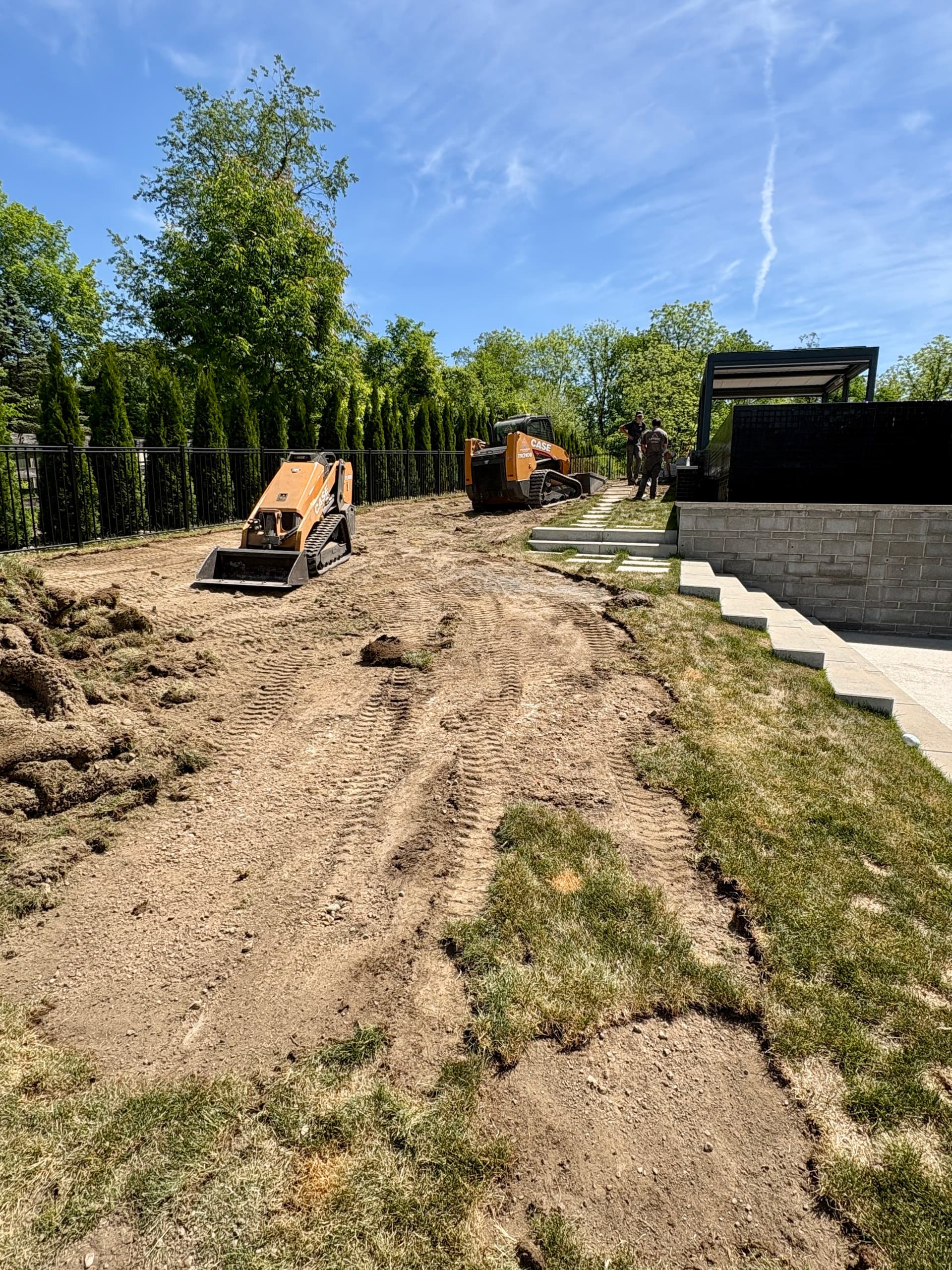
When a yard has drainage problems or uneven ground, laying new sod on top of the old stuff is just a band-aid. The real fix starts underneath. That's exactly what we were dealing with here - old sod that had to come out completely before we could do anything worth doing.
We stripped everything out, brought in topsoil, and regraded the entire yard. That step matters more than most people realize. If the ground underneath isn't graded right, water pools where it shouldn't, the lawn develops soft spots, and no amount of good grass is going to save it. Getting the grade right first is what separates a lawn that lasts from one that needs redoing in a few years.
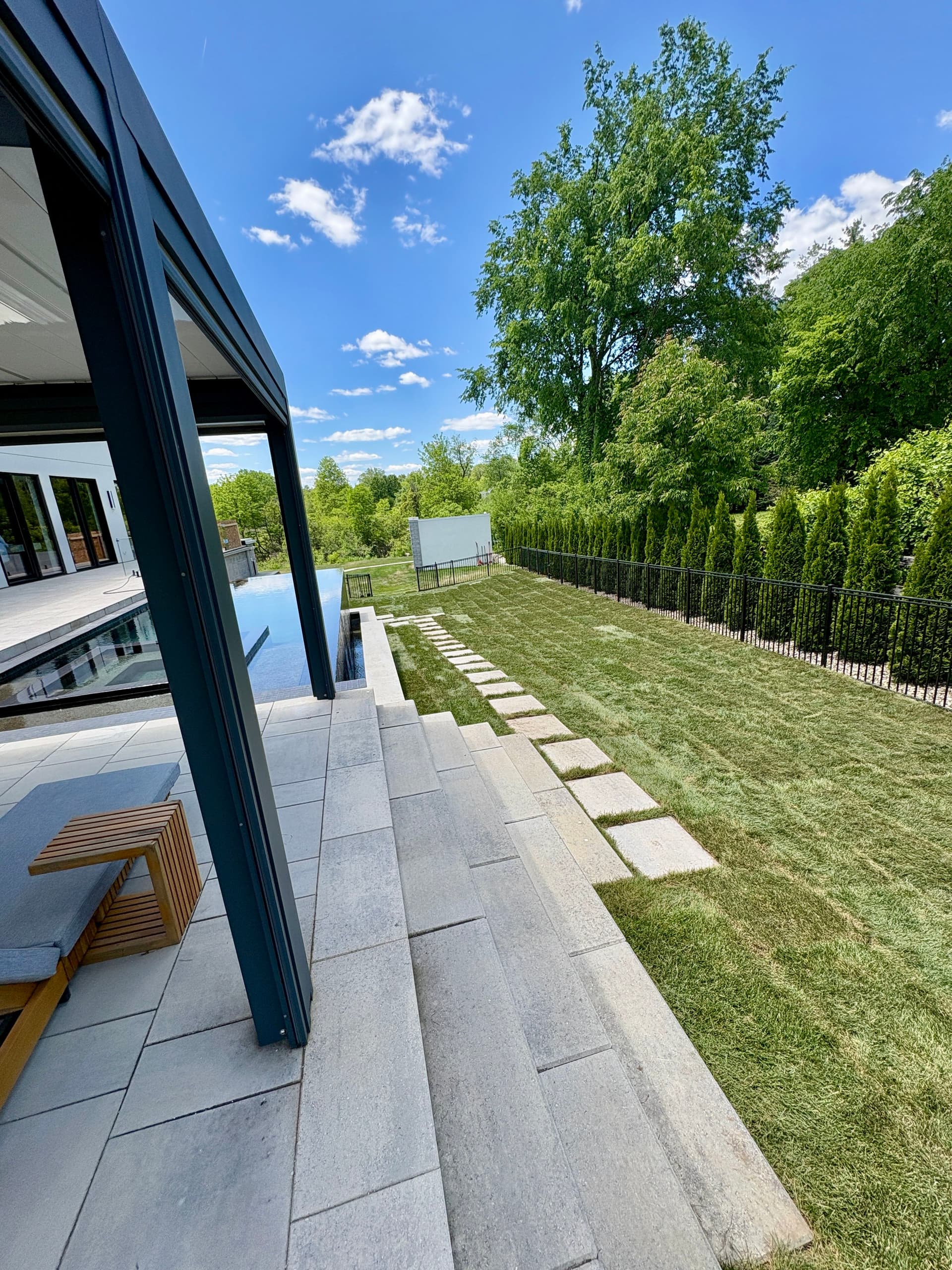
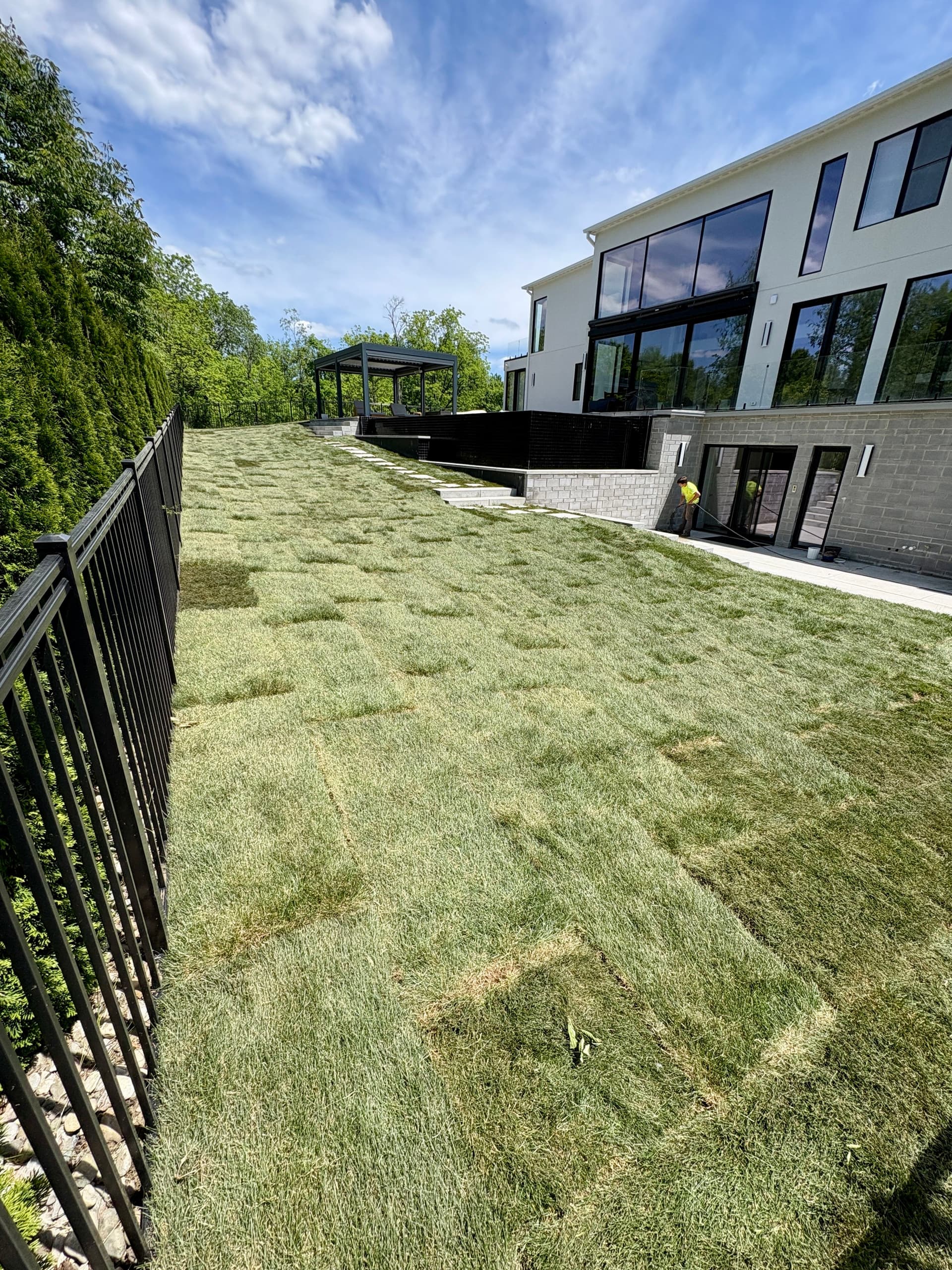
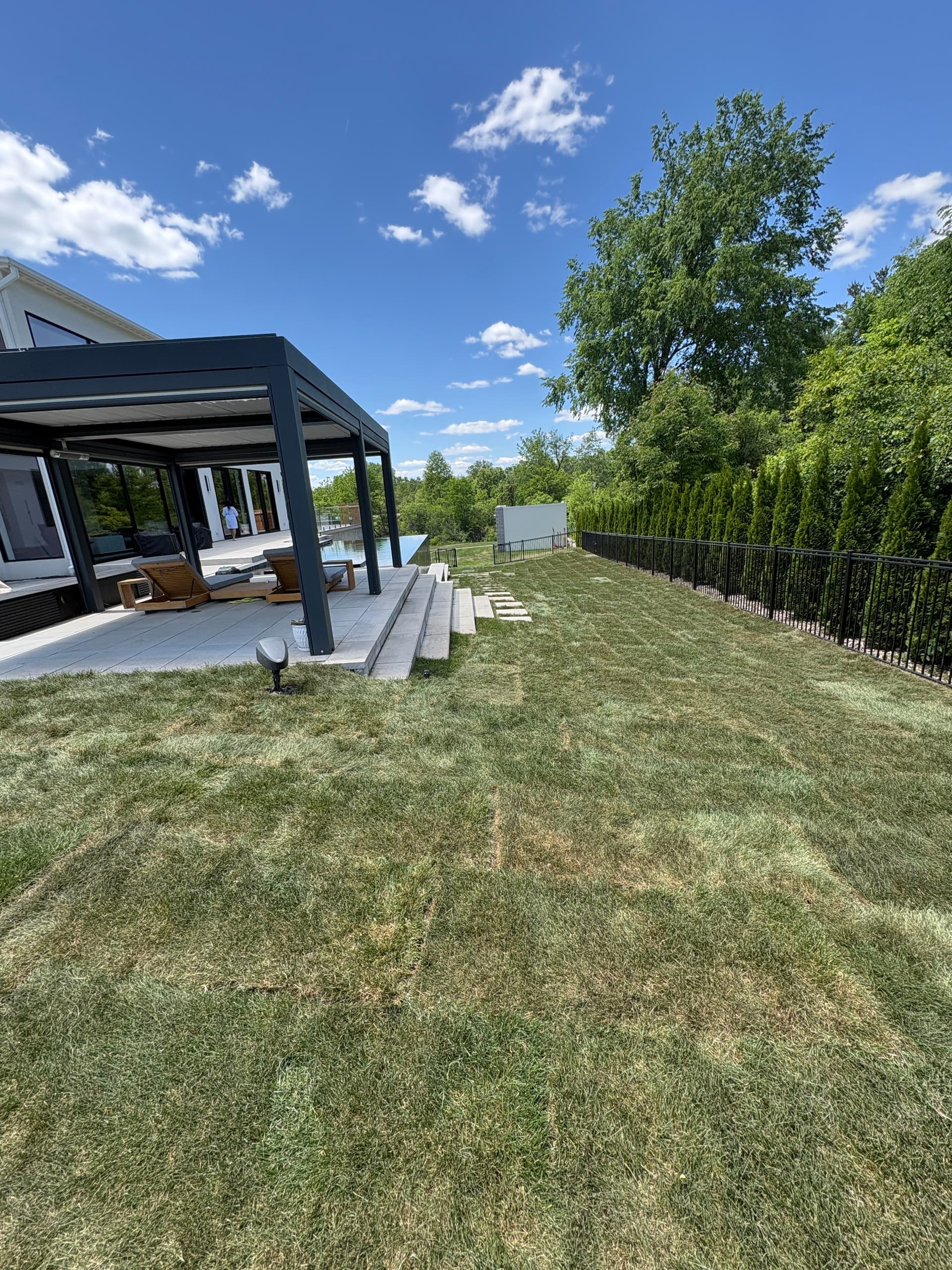
Once the ground was prepped and smoothed out, we laid fresh-cut Kentucky blue sod across the full yard. Kentucky blue is a solid choice for Michigan - it holds up well, stays dense, and has that deep green color that makes a property look sharp. Freshly cut sod laid on a properly graded base gives roots the best possible start.
The finished yard sits next to a high-end outdoor living space with a pool, pergola, and large stone patio - so the quality of the lawn had to match the rest of the property. A patchy or uneven lawn next to hardscape like that would stick out immediately. Getting the grading and the sod right meant everything tied together the way it should.
This kind of job - strip, regrade, and re-sod - is one of the most common requests we get from homeowners who are tired of fighting a lawn that was never set up correctly in the first place. If your yard holds water, has dead patches, or just never seems to look right no matter what you do, the problem is usually in the ground, not the grass.